“How to withdraw USDT to monobank” is one of the most common search queries of a Ukrainian crypto user. The logic is simple: the crypto is sold, you need hryvnia on your usual card. But between “I have USDT” and “hryvnia arrived” lie several decisions, each of which affects the final amount and the calm of your bank account.
Let's break down this direction honestly: where the value is real, where the bank will ask questions, and how to choose an exchanger rather than just the top row of the table.
Why “crypto → Monobank” is direction #1
Monobank is convenient, instant transfers, a pleasant app — millions use it. That's why exchangers actively support crediting hryvnia to this card specifically, and in the monitor for the “USDT → Monobank UAH” direction you'll see dozens of offers. Your task is not to take the first one but to compare.
The monitor shows exchangers' rate and reserve, but the money is credited to the card by the exchanger, not by BestChange or us. You enter all details on the exchanger's site — make sure you got there via the monitor link.
Step by step: USDT → hryvnia to a Monobank card
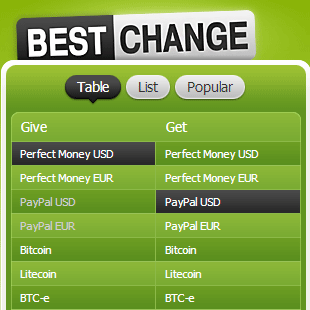
- Direction. In the monitor, on the left choose “Tether USDT” in your network (usually TRC-20), on the right — “Monobank UAH”.
- Comparison. Assess the top rows: rate, reserve (enough hryvnia for your amount), and the number and freshness of reviews.
- Request. On the exchanger's site, enter the USDT amount and your Monobank card number. The system will show the amount to be credited and the address for the crypto transfer.
- Transfer. Send USDT to the given address on the specified network. Double-check the network.
- Credit. After network confirmations, the exchanger transfers hryvnia to the card. Usually minutes, but longer under load.
If the exchanger expects USDT on the TRC-20 network and you send BEP-20 or ERC-20, the money goes into an incompatible network. Recovery is extremely unlikely. The sending network must match the receiving network.
Look at an alternative asset conversion before sending crypto to an exchanger.
How to choose an exchanger, not just a rate
The top row isn't always the best choice. An experienced user looks at a combination of factors:
| What to check | Bad sign | Good sign |
|---|---|---|
| Rate | Suspiciously above market | In line with the market, no “magic” |
| Reserve | Smaller than your amount | With headroom for the request |
| Reviews | Empty or all negative | Many recent ones, with replies |
| Service age | Appeared yesterday | Running for years |
| Support | Silent | Replies in chat quickly |
A 0.2–0.3% rate difference isn't worth the risk of hitting a service with a bad reputation and a “hung” request. Count not just the value but also the likelihood of problems.
Limits, AML monitoring and taxes
A topic advertising texts love to skip, but it's exactly the one that spoils the mood most often:
- Exchanger limits. Every request has a minimum and maximum, plus a reserve. A large sum may have to be split into several requests.
- Bank AML monitoring. The bank is obliged to watch for suspicious operations. Regular large incoming funds from various services may trigger a “where's the money from” request. Keep evidence (exchange history, contracts).
- Splitting. Spreading amounts over time is sensible, but artificial “smearing” to bypass controls can itself look suspicious. Act transparently.
- Taxes. Rules depend on your jurisdiction. We don't give tax advice — for significant sums consult a specialist.
A healthy approach to AML monitoring isn't “how to bypass it” but “how to be ready”. Keep your exchange operation history, exchanger request screenshots and correspondence. If the bank asks for the source of funds, you'll have an answer — and the matter closes.
How long the credit to the card takes
Hryvnia usually arrives on Monobank within a few minutes after your crypto transaction has gathered the required number of network confirmations. But the timing isn't guaranteed and depends on three factors:
- Transfer network. On TRC-20 confirmations are fast; on a congested ERC-20 with a low fee — longer.
- Exchanger mode. Automatic exchange is faster than manual. At some services, night-time operations are handled by an operator.
- Load and anti-fraud. Sometimes the exchanger runs an extra check on a large request.
Check the crypto transaction status by TXID in a blockchain explorer. If the network has confirmed the transfer but there's no hryvnia, write to the exchanger's support with the request number. The funds and status are with them; the monitor can't speed up the deal.
Card and account safety
- Enter your card number only on the exchanger's site you reached via the monitor link.
- Never share the CVV, expiry or SMS codes — they're never needed for a credit.
- Check the exchanger's domain: phishing copies of popular services exist.
- Do your first deal with a small amount. It's cheap insurance against an unpleasant surprise.
The exchanger only needs your card number to credit you. Anyone asking for the CVV or an SMS code “to transfer to you” is a scammer. Full stop.
Common mistakes in the “crypto → Monobank” direction
- Wrong USDT network. Sending on a network other than the one the exchanger expects is the most common loss of money.
- Chasing the best rate at the expense of reserve and reviews. A few-kopeck difference isn't worth a hung request.
- An error in the card number. One wrong digit and the money goes elsewhere. Check the number twice.
- Working with a phishing “mirror”. Go to the exchanger only via the monitor link.
- A large sum from a new account without a trial operation. Test with a small amount first.
The exchanger credits hryvnia to the number you entered. Get a digit wrong and the money goes to another person, and recovering it will be extremely hard. Copy the number from the Monobank app and verify it before confirming the request.
What to do if your card is blocked
A card block after an incoming payment from an exchanger is frightening, but most often it's not a catastrophe but an AML monitoring procedure. The bank is obliged to react to atypical operations — it's a legal requirement, not a “punishment for crypto”. A calm action plan:
- Don't panic and don't delete your history. Contact the bank's support and clarify the reason: a full account block or a restriction on a specific operation.
- Prepare documents. The bank will most likely ask you to confirm the source of funds: exchange statements, exchanger request screenshots, operation history.
- Answer transparently. An honest “I sold cryptocurrency via an exchanger, here's the proof” usually closes the matter.
- Draw conclusions for the future. Sensible amounts, keeping proof, and no “splitting to bypass” reduce the chance of a repeat.
Get into the habit of keeping a chain of evidence for every large operation: where the crypto came from, which exchanger the exchange went through, which TXID. Five minutes of discipline saves weeks of dispute if the bank asks a question.
Worked example: exchanging 500 USDT for hryvnia
Let's show the logic with a hypothetical example (figures are illustrative — verify the real ones in the monitor). Say you have 500 USDT on the TRC-20 network and want hryvnia on Monobank.
- We open the direction “USDT TRC-20 → Monobank UAH”. The monitor shows top rows with a rate of about 41.6 ₴ per 1 USDT.
- We compare. The top exchanger gives 41.62 ₴ but has an 800,000 ₴ reserve and few recent reviews. The second — 41.55 ₴, a 3.4M ₴ reserve, thousands of reviews. Our amount is ~20,800 ₴; both reserves cover it, but the second looks steadier.
- We calculate the result. At 41.55 ₴ for 500 USDT that's ≈ 20,775 ₴ before fees. Subtract the TRC-20 network fee (a few USDT) to get the amount to be credited.
- We create a request at the second exchanger, enter the card number, get the address and network.
- We send USDT strictly on TRC-20, save the TXID, wait for confirmations — hryvnia arrives on the card.
Note: the difference between the “best” and “second” rate here is about 35 ₴ on the whole sum. Would we take an exchanger with a weak reputation and a smaller reserve for those 35 ₴? No. That's how an auditor's mindset works: a small overpayment for reliability is almost always justified.
All numbers above are shown to illustrate the calculation mechanics. Always check current rates, reserves and fees in the monitor on the official site and on the specific exchanger's page before a deal.
Monobank, Privat24 and other ways to receive hryvnia
Monobank isn't the only crediting option, and it's sometimes sensible to spread the load across several channels. In the monitor for crypto directions you'll usually meet several ways to receive hryvnia:
| Receiving method | Speed | Nuance |
|---|---|---|
| Monobank card | Minutes | Convenient, but don't load one card with large turnover |
| Privat24 card | Minutes | An alternative for spreading the load |
| Cash in the city | By appointment | For large sums, an in-person meeting at the exchanger's office |
| Another payment system | Varies | Sometimes needed as an intermediate link |
Why does it matter? The same exchanger can offer a different rate depending on the receiving method: crediting to a card is usually more expensive than cash because of bank fees and risks. So when comparing rows in the monitor, compare not just “USDT → hryvnia” but specifically “USDT → Monobank UAH” — otherwise you risk mistaking a rate for another method as your own.
Another practical point is spreading turnover. If you regularly withdraw noticeable sums, running everything through a single card is not a great idea from the AML monitoring standpoint. Having a second card (say, Privat24 in addition to Monobank) and a reasonable distribution of incoming funds looks more natural to bank algorithms and reduces the block risk. The monitor is convenient because it shows all available methods in one table, and you choose to fit the situation rather than out of habit.
Keep two cards from different banks handy and compare the card rate with the cash rate. For a large sum, the difference may pay for a trip to the exchanger's office, and spreading incoming funds across cards protects you from extra AML questions.
Checklist before exchanging
- Correct direction and USDT network chosen?
- Does the exchanger have a good rating and a reserve larger than your amount?
- Monobank card number copied and checked character by character?
- Did you reach the exchanger's site via the monitor link, and is the domain correct?
- Is a small amount chosen for the first deal?
- TXID and request details saved in case of questions?
Verdict
The “crypto → hryvnia on Monobank” direction is workable and convenient if you approach it like an auditor, not a gambler. A rate monitor saves you money on comparison but doesn't remove your responsibility: the transfer network, the exchanger's reputation and your readiness to explain the source of funds to the bank are on your side.
Compare several top rows → pick an exchanger with a good reserve and reviews → enter the card → verify the network → start small. That way the final amount is maximal and your nerves stay intact.